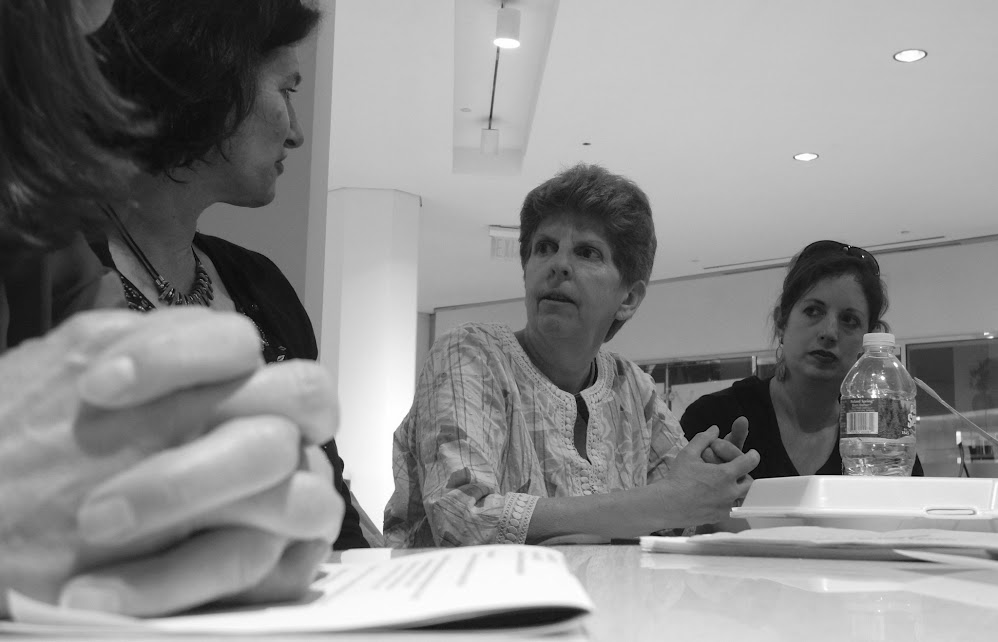
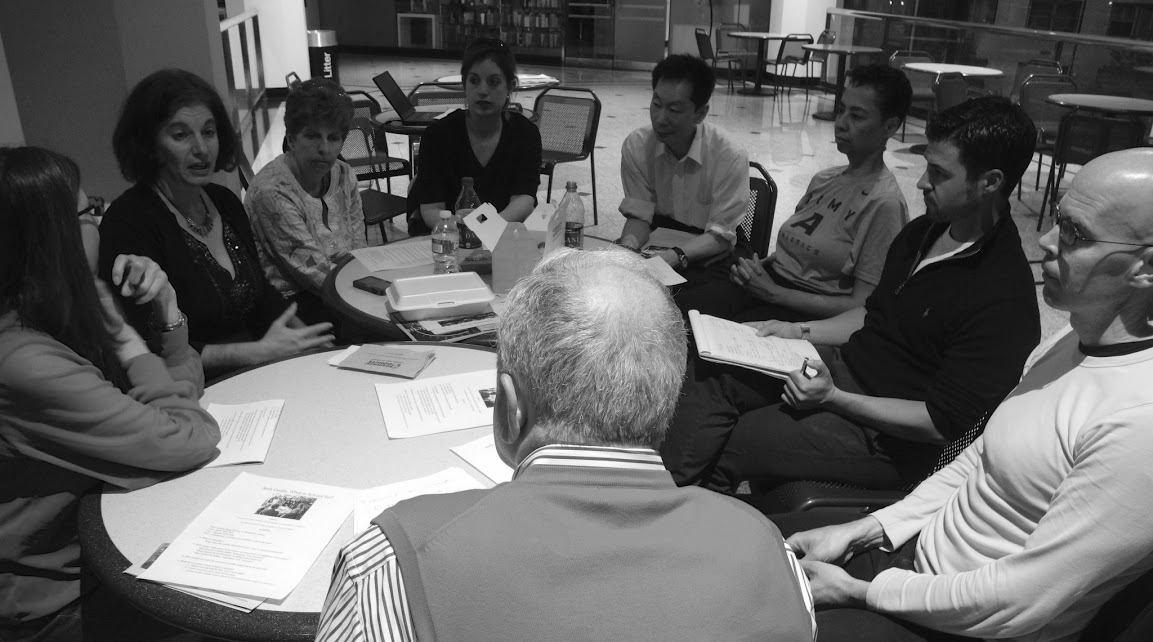
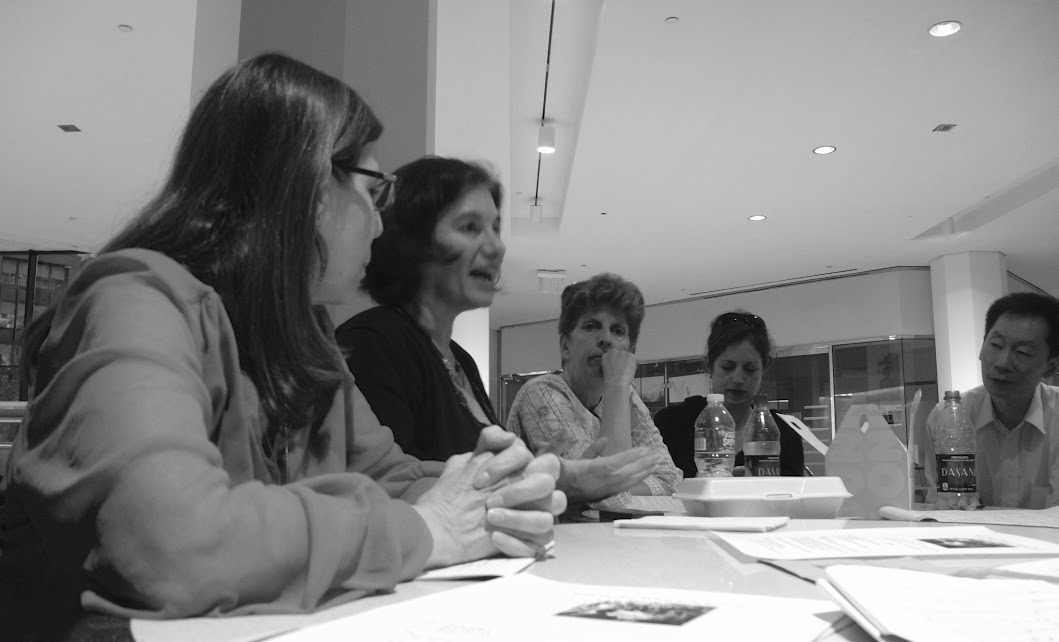
| Are You Too Self-Critical? Or, Over-Confident? Do Men and Women Differ?Thursday, June 20, 3:45 – 5:00 pm Gottesman Library, Teachers College, 525 West 120th St., Second Floor (Between Broadway and Amsterdam Avenues — 116th St./Columbia University stop on the #1 train) Hosted by Ron Gross RSVP at http://www.meetup.com/Conversations-New-York/events/122481962/ Please join us to share your experiences, reflections, and insights.
These important questions were posed recently by David Brooks, author of The Social Animal and a regular Op-Ed columnist for The New York Times, who invited his readers — and us — to respond. We will — and we’ll review the most interesting responses he has received so far. There will be a display of relevant books. Light refreshments will be available. Next session: Thursday, Thursday, July 11th, 3:45 pm For more information: www.SocratesWay.com/join.html |
Category Archives: News
CREATIVE AGING: New Ways to Thrive and Contribute Throughout Our Ever-Longer Life-Spans – May 30
CREATIVE AGING:
New Ways to Thrive and Contribute
Throughout Our Ever-Longer Life-Spans
Thurs., May 30, 3:45 sharp — 5:15 pm sharp
Gottesman Library, Teachers College, 525 West 120th St.
RSVP at http://www.meetup.com/Conversations-New-York/events/121003972/
Socrates himself reached the peak of his powers at the age of 70 (not an easy feat in those days) – and he would have continued growing, learning, and ‘kicking butt’ if he hadn’t been sentenced to death by hemlock!
- Do you have concerns about the future well-being of the elders in your life – your parents or grandparents? Are we victims of “Ageism” — stereotyping people on the basis of their age?
- Are you now or do you anticipate sharing responsibility for an elders’ quality-of-life?
- Are you aware that your own eventual “successful aging” will depend importantly on some things you do now? (“If I’d known I was going to live so long, I would have taken better care of myself.”)
At this Conversation we will share our experiences with aging and with those elders who have touched our lives.
Please come to share your experiences and reflections:
What does Aging mean to you?
Do you feel that there are stereotypes, prejudices, and social practices that harm older adults (“Ageism”)?
What are your concerns for and about the elders in your life?
What do you hope will characterize your own later years, in terms of life-style, activities, opportunities, and supports?
Light refreshments will be available. There will be a display of relevant publications.
Suggested optional reading:
The Third Chapter, Sara Lawrence-Lightfoot (Sarah Crichton Books, Farrar, Straus and Giroux, New York 2009)
CREATIVE AGING: New Ways to Thrive and Contribute Throughout Our Ever-Longer Life-Spans – May 30
CREATIVE AGING:
New Ways to Thrive and Contribute
Throughout Our Ever-Longer Life-Spans
Thurs., May 30, 3:45 sharp — 5:15 pm sharp
Gottesman Library, Teachers College, 525 West 120th St.
RSVP at http://www.meetup.com/Conversations-New-York/events/121003972/
Socrates himself reached the peak of his powers at the age of 70 (not an easy feat in those days) – and he would have continued growing, learning, and ‘kicking butt’ if he hadn’t been sentenced to death by hemlock!
- Do you have concerns about the future well-being of the elders in your life – your parents or grandparents? Are we victims of “Ageism” — stereotyping people on the basis of their age?
- Are you now or do you anticipate sharing responsibility for an elders’ quality-of-life?
- Are you aware that your own eventual “successful aging” will depend importantly on some things you do now? (“If I’d known I was going to live so long, I would have taken better care of myself.”)
At this Conversation we will share our experiences with aging and with those elders who have touched our lives.
Please come to share your experiences and reflections:
What does Aging mean to you?
Do you feel that there are stereotypes, prejudices, and social practices that harm older adults (“Ageism”)?
What are your concerns for and about the elders in your life?
What do you hope will characterize your own later years, in terms of life-style, activities, opportunities, and supports?
Light refreshments will be available. There will be a display of relevant publications.
Suggested optional reading:
The Third Chapter, Sara Lawrence-Lightfoot (Sarah Crichton Books, Farrar, Straus and Giroux, New York 2009)
Technology and Humanity: Allies, or… “Frenemies?” –June 6
Announcing a Conversations New York event: “Technology and Humanity: Allies, or …”Frenemies?”
To be held on June 6, 7 pm, at the Citicorp Atrium, Lower Level.
Look for the table with the “CNY” sign.
Please RSVP here: http://www.meetup.com/Conversations-New-York/events/116229422/
About the Conversation:
We will consider how technology affects society, and perhaps even defines the times we live in. Do you ever feel that technology is out of control, a force with a mind and will of its own? What causes this, and what are the consequences? We will focus our conversation on the following:
1. Are you a technophobe, or technophile? Why? How has technology affected your job, your personal life, health, leisure time? Is it making your life better, or worse? Does technology create jobs, or destroy them? What other impacts on society concern you?
2. Will the Internet unite humans in a global village, or isolate us? On Twitter, Facebook, et al., do you find people of diverse opinions, or are we inevitably drawn to chatrooms populated by people just like ourselves? Does our very freedom to choose what we read and learn lead to simply confirming our current beliefs?
3. What are the dangers of rapid technological change? Will we unleash something that destroys us? Will hackers cause such chaos (ID theft, falsifying records, stealing money, etc.) that we abandon the Internet? What about the government– does surveillance make us safer, or does the government know too much already? What can citizens do?
4. What will technology look like in the distant future? Will designer genomes eliminate disease? Will human genetic diversity be eliminated? (In the future, perhaps everyone is blonde and tall..) Will microbots in our bodies make us immortal? Will mind and machine merge into a new form of consciousness, giving humans unimagined mental powers and creativity?
About the Moderator: Laurence Mailaender works in the technology industry, doing research aimed at improving wireless systems. He has a PhD in Electrical Engineering, and spent 12 years as a researcher at Bell Labs. Currently he develops advanced communication and GPS-geolocation systems for customers in various agencies of the U.S. Government.
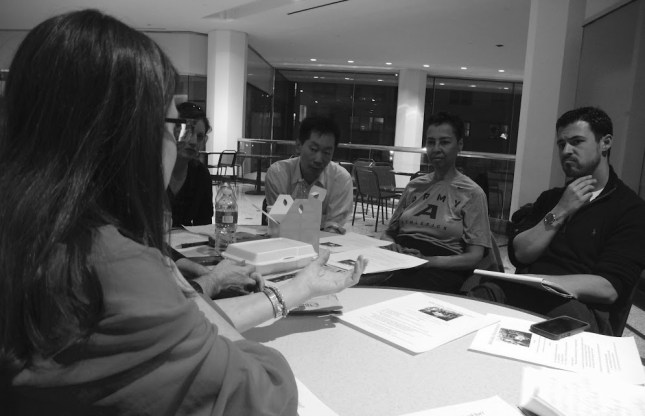
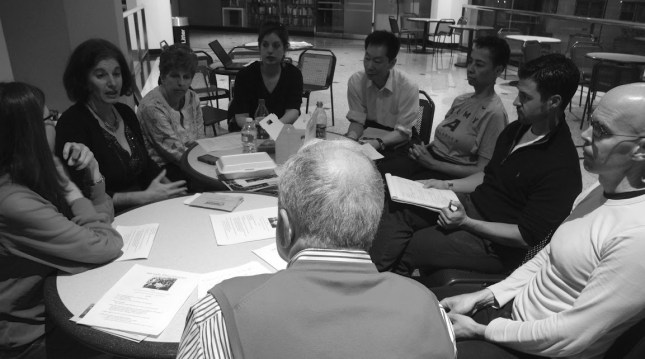
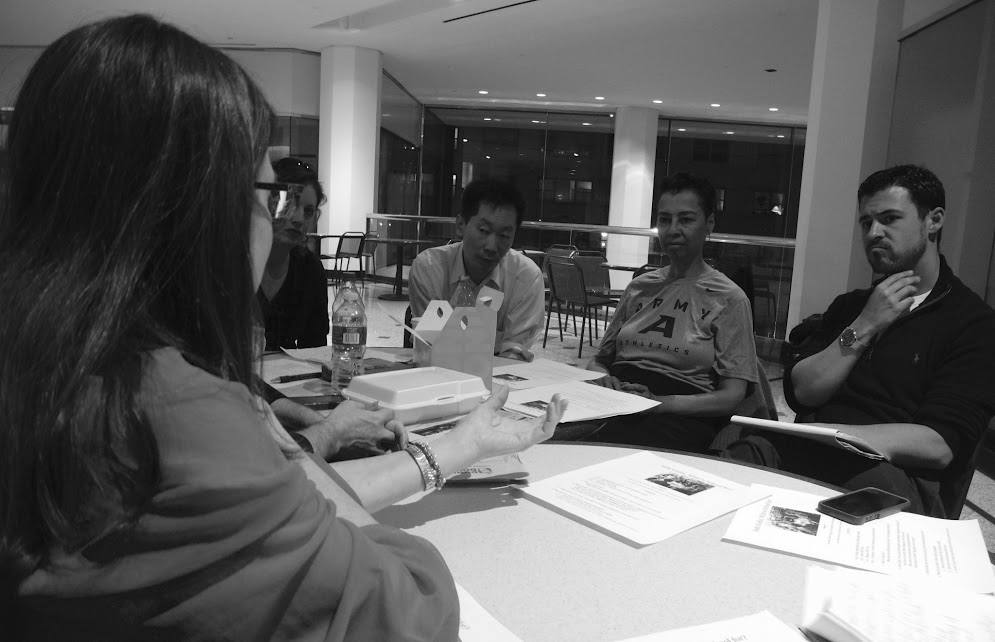
Socrates Cafe Brooklyn & CNY – Seth Godin, “What is School for?” – May 6
Stop Stealing Dreams: What is School for?
Seth Godin,
“If it is work, they (students) try to figure out how to do less. If it is art, we try to figure out how to do more.”
Monday, May 6, 2013, 6:30 pm -8:30pm, Midtown
RSVP at http://www.meetup.com/Conversations-New-York/events/111446882/
Seth Godin is sharply critical of our current education system and proposes 8 changes to turn it around.
We discussion Seth Godin’s TED Talk,
(Godin is not attending this event.)Stop Stealing Dreams – What is School for?
https://www.facebook.com/photo.php?v=10200359513284944http://www.squidoo.com/stop-stealing-dreams
Join us for food, drinks, and discussion.
Bring your observations.
Short social before start.
–Greet old friends and meet new ones.
6:30 pm Social
7:00 pm Conversation on Seth Godin’s TED Talk: Stop Stealing Dreams
8:30 pm + All are welcome to continue the conversation, self-moderated.
(Food court is open until 7:30 pm which is located two levels belowthe mezzanine tables where we will be holding the conversation. Mexican Grill open until 11 pm.)
TED Talk: Seth Godin, Stop Stealing Dreams.
http://www.squidoo.com/stop-stealing-dreams
1. What is school for?
What does our public education teach? How is success evaluated?2. Seth Godin, “Does great performance in school leads to happiness and success?”
How does our society define “happiness” and “success?”
What does great performance in public school leads to?
How would you define “happiness” and “success?”3. What would you want the purpose of public education to be and why?
4. What do you think of Seth Godin’s proposals?
Seth Godin is the author of 14 books that have been bestsellers around the world and have been translated into more than 35 languages. Permission Marketing was a New York Times bestseller, Unleashing the Ideavirus is the most popular ebook every published, and Purple Cow is the bestselling marketing book of the decade. His free ebook on what education is for is called STOP STEALING DREAMS and it’s been downloaded millions of times since it launched in January, 2012.In addition to his writing and speaking, Seth is founder of squidoo.com, a fast growing, easy to use website. His blog (which you can find by typing “seth” into Google) is one of the most popular in the world.
Please note that the Seth Godin is not attending this event. This event works like a book club, but the discussion topics are clips from TED (www.ted.com), “Ideas Worth Spreading”. Watching Seth Godin’s TED Talk beforehand is highly encouraged. If the venue permits, we’ll watch his approx. 17 minute TED Talk before the conversation and then spend an hour discussing the ideas presented.
About the Moderators:
Professor David Storey. Socrates Cafe Brooklyn http://davidestorey.com/about-2/
Ron Gross is the founder of Conversations New York. He’s been organizing exciting, important CONVERSATIONS for 20 years, and currently holds them regularly on the Columbia University campus and elsewhere through the city. He’s the author of 23 books on LIFELONG LEARNING. He was recently honored for lifetime achievement in the field by the International Society for Self-Directed Learning. The late Buckminster Fuller said of Ron’s work: “If humanity is to pass safely through its present crisis on earth, it will be because a majority of individuals are now doing their own thinking. Ronald Gross’ work has pioneered in improving the climate for such thinking in the United States.”
Yen is a graduate of the US Air Force Academy and a Master Navigator with career experience in the Federal, State, and corporate training/evaluation systems training and evaluating navigators, first-responders, and corporate trainers/employees for Fortune 100 companies. Currently he is a manager at Lyhun Realty.
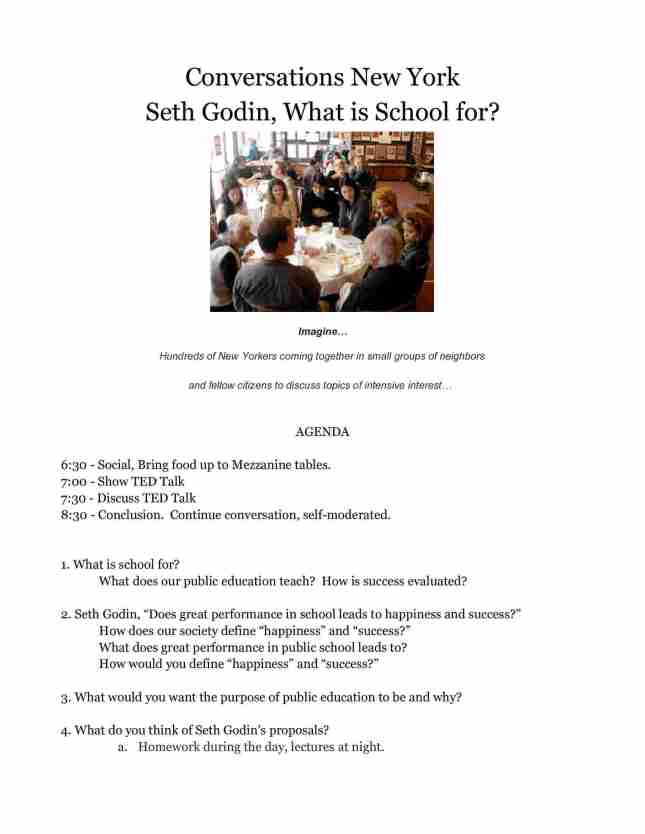


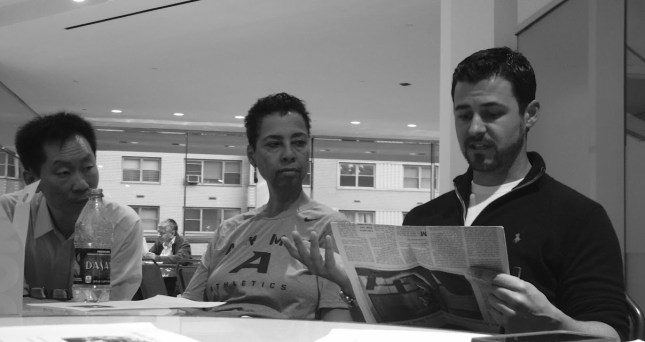

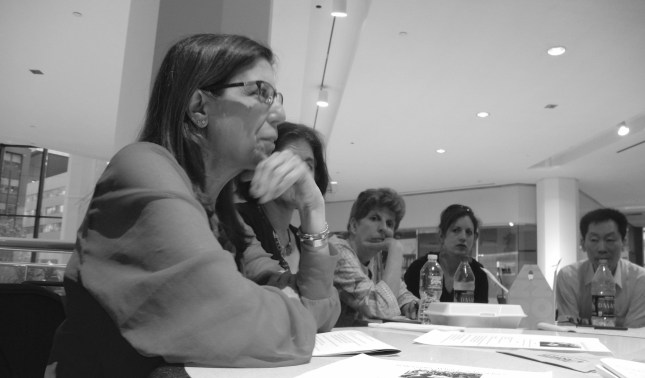
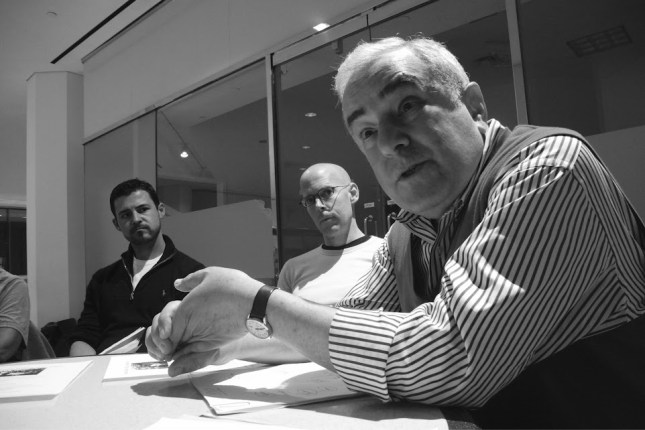


What You Can Do Now:
- Follow CNY at http://www.conversationsnewyork.com.
- Like us on Facebook at http://www.facebook.com/conversationsnewyork.
- Consider hosting a conversation yourself. We can assist. http://www.meetup.com/Conversations-New-York/messages/boards/thread/33801052
Want to Join the CNY team?: We have opportunities for professionals with relevant skills to contribute pro bonoto the development of CNY in several important areas:
- Editorial
- Calendar-development
- Funding
- Media Relations/Social Networking
- Venue-finding and Evaluation
- IT/Operations
- Legal
We are also seeking organizational partners and funding, from public and private agencies who share our interest in fostering a richer cultural life in NYC. Thank you.




Delightful Discussions with Natalie: The Meaning of Love
This is a one-time conversation about our experiences with love and how to succeed in loving relationships!
Please RSVP to both meetup sites. Thank you.
http://www.meetup.com/Guided-Romantic-Memoir-Writing-Group/events/114626642/ http://www.meetup.com/Conversations-New-York/events/116696322/
………………
Questions of the Session
The question, “What is Love?” haunts us as a culture. Many of us seek love as one of the major goals in our lives. Many of us seek love through ways that are different from what is considered ‘the norm’ in our societies. Many of us seek to redefine what love means to us. This conversation is meant to share our opinions and values surrounding loving relationships.
What do you immediately think of when you think of the word, ‘love?’
Does ‘love’ have a different meaning for you than it does for other people that you know?
Where are your boundaries when it comes to love – how soon, after having met someone, can you say that you love them?
What kind of ‘love language’ do you use? (More information will be given out during the conversation on what a ‘love language’ is).
Why is love important to you in your life?
…………..
The cost is free!
The location is at
http://www.meetup.com/Guided-Romantic-Memoir-Writing-Group/events/114626642/ http://www.meetup.com/Conversations-New-York/events/116696322/
Light refreshments will be provided; please leave a small donation of $2-3 if you partake.
Any questions, please message Natalie at
http://www.meetup.com/Conversations-New-York/members/28564742/?a=viewBioRsvpList_control2
………..
Note: Harassment of any kind – on the basis of biological sex, sexual orientation, gender identity, or gender presentation, or on the basis of race or ability or any other reason – during Meetups offered by this group will not be tolerated.
Do our lives have a story? Are they ‘going somewhere’? – April 24
Do our lives have a story? Are they ‘going somewhere’?
Wednesday, April 24, 2013
7:00 PM to 8:30 PM
CitiCorp Atrium Lower Level
153 E 53rd street (Between Lexington and 3rd ave), New York, NY
Call me at 646-207-5149 this evening if you have trouble finding the group at the CitiCorp building Atrium… Evan Sinclair (rsvp directly to Evan at his gmail.com address listed at CNY meetup http://www.meetup.com/Conversations-New-York/events/112200192/ )
“Cut off even in the blossoms of my sin,
Unhousel’d, disappointed, unanel’d,
No reckoning made, but sent to my account
With all my imperfections on my head…”
Hamlet: Act 1, Scene 5
Like Hamlet’s father, many lives come to premature ends, often quite abruptly, well before what we perceive as a natural end, before ‘things’ can be fulfilled, reconciled and resolved. But the very idea of a life cut short implies that life has, or should have, some kind of integrated wholeness. By nature of how our brains work, do we have no choice but to perceive coherent continuity as we pass through time? If so, does this continuity confer moral, spiritual or other kinds of meaning, purpose and value to our lives? If not – if one’s life is just ‘one event after another’ without a sense of cohesion – what does that kind of life feel like?
Evan has facilitated numerous such discussion groups over the years, and is in possession of a restless and inquisitive mind.
New Aging for a New Age: Challenges, Visions, and Strategies for a World Growing Older (and Wiser?!) – May 20
The University Seminars on
Innovation in Education (www.columbiaseminar.org)
and
Ethics, Moral Education, and Society
present
New Aging for a New Age:
Challenges, Visions, and Strategies for
a World Growing Older (and Wiser?!)
Ron Gross and Sue Salko
Members, Seminar on Innovation in Education
Co-founders, Life Review and Creative Aging
Monday, May 20, 2013, 7-9 pm
at Columbia University’s Faculty House
64 Morningside Drive, New York, NY 10027
Every day, 10,000 baby boomers turn 65, and they are transforming America’s social, economic, political, and cultural landscapes. From family life to healthcare, from media to technology, in politics to psychology — the new prominence of older adults is generating challenges, inspiring visions, and stimulating innovative strategies.
At this session, we will explore:
1. The impact of the “Age Wave” on personal and public life.
2. Against Ageism: Combating Prejudice, Stereotypes, and Abuse.
3. Aging and the Arts: “Soul clap its hands and sing, and louder sing, For every tatter in its mortal dress.” (W. B. Yeats).
4. Aging and Lifelong Learning: Generativity, Life Review, Spiritual Dimensions of Aging (“Saging”), Wisdom, and “Gerotranscendance”.
5. Aging, Healthcare, and Nurturing the Older Brain.
6. Innovative Programs and Projects: Outstanding Initiatives Featured at the most recent annual Aging in American conferences.
7. Aging and American Values: How Are the Core Values of Americans Challenged by a Nation Growing Older?
Speaker Bios:
Ron has published 20 books including THE NEW OLD: Struggling for Decent Aging (Doubleday), hailed by leaders of the movement including the National Council on the Aging, and the late Maggie Kuhn, founder of the Gray Panthers. He was honored earlier this year for Lifetime Achievement in fostering Lifelong Learning, at the annual meeting of the International Society for Self-Directed Learning (www.socratesway.com).
Sue is a licensed social worker who has served as senior advocate for NYS Senator Kemp Hannon, and is an Arthritis Foundation-certified instructor in Tai Chi and exercise modalities. She regularly presents programs for organizations such as the National Council of Jewish Women, and at senior facilities in the New York metropolitan area.
Together, Sue and Ron report each year on the annual convention of the American Society on Aging. They currently offer free Life Review and Creative Aging programs to hundreds of seniors on Long Island (NY) under grant from the Greentree Foundation.
Reminder – CNY Event at Gottesman Libraries on Thursday, 4/11 at 4:45pm!
Socratic Conversation: Generational Patterns of Familial Child Abuse, with Natalie Millman, Thursday, 4/11, 4:45-6pm
Inspired by Socrates’ famous conversations with his friends in the marketplace of 5th century Athens, we engage in spirited discussions of ideas and issues. Socratic conversations range broadly and probe deeply into the basic challenges of life. They are informed by the latest literature for reference and follow up. While building a sense of community on campus, these meetings enliven the intellectual atmosphere and model dialogue and discussion as modes of inquiry. They are part of a year long series of Socratic Conversations hosted by the Gottesman Libraries.
- The family is the first system with which most children interact, providing a social structure with role models that exhibit behaviors that children observe and imitate. It also provides built-in feedback to reinforce behaviors. The school system only becomes relevant to children after the initial family system has made its impact. When children are abused in the family system, however, much of the responsibility for "un-doing’ the damage falls to members of the school system, including teachers and social workers.
We will be addressing several questions during this conversation:
-
- How do you know when a child is being abused? Is there a spectrum of
abuse, or is it black-and-white? - What kinds of information and resources are available currently to prevent
child abuse in the family system? Are they effective or ineffective, in your experience? Why might that be? - What challenges and opportunities exist for us as teachers, social workers, and and other education professionals as we try to work with abused children in the school system?
- What would you like to see happen on a national, state, or local level concerning familial child abuse prevention and intervention in the school system? What can we ourselves do to address the problem?
- What about involvement of educational personnel in the forensic/child abuse interview process, especially involving children with disabilities? How can school personnel support these efforts and "join" in protecting children?
- What Is Child Abuse and Neglect? (Child Welfare Information Gateway, U.S. Dept. of Health and Human Services)
- A Piece of Cake, by Cupcake Brown (Broadway, 2007)
- I Love you Mom: Please Don’t Break My Heart, by John Borgstedt (AuthorHouse, 2009)
- My Prison without Bars: The Journey of a Damaged Woman to Someplace Normal, by Taylor Evan Fulks (Create Space, 2012)
- To Soften the Blow, by Lynnie Vessels (Create Space, 2012)
- How do you know when a child is being abused? Is there a spectrum of
- NOTE: Because of the time limit, this conversation is not intended to be a group therapy session to talk about personal traumatic experiences of abuse, nor is it intended to be a place to talk about specific cases of horrific abuse that we have encountered professionally. While these experiences are close to our hearts and motivate us to care deeply about this kind of work, the focus of this conversation is on discussing strategies for working with abused children and advocate for change on a multi-systems level.
Suggest optional reading:
This Socratic conversation will be conducted by Natalie Millman, MSW student at Columbia University School of Social Work. Natalie lives in Manhattan and works as an advocate for a variety of issues; her practice specialty is in health and disabilities with an interest in the aging population. Amongst other activities, Natalie teaches writing classes in Manhattan and has facilitated formal conversations for groups since May 2012.
- Happier Endings: How Have We, How Do We, and How Should We Handle It When Something Ends?, with Ron Gross, Thursday, 4/25, 4-5pm
- As this academic term concludes and we bid farewell for now to classmates, teachers, and colleagues, we’ll gather to share what we’ve experienced, and what we’ve learned, about the inevitable goodbyes that occur in all our lives.
We’ll consider finales big and small, ordinary and extraordinary, sudden and protracted, painful and liberating, based on the book Exit: The Endings That Set Us Free, by Harvard professor Sara Lawrence Lightfoot.
We’ll draw from our personal lives, but we’ll also ponder the social and economic conditions which make Exiting a pervasive part of American lives today, due to such disruptions as Divorce, Immigration, and constantly Changing Jobs and Careers.
"Our exits are often ignored or invisible," writes Lightfoot. At this session, we’ll focus on how we might turn them into endings that set us free.
**
Where: Second Floor
These highly-participatory conversations with fellow students are moderated by Ronald Gross, author of Socrates’ Way and Co-chair of the University Seminar on Innovation in Education.
Your Invitations to CNY Events in April — From Child Abuse to Happier Endings!
You are warmly invited to any of these exciting, important Conversations which will be presented under CNY auspices in April. Details are available on the CNY site and calendar, https://conversationsnewyork.com/calendar-of-conversations/
DATE/TIME: Thurs., April 11, 5-6 pm
TOPIC: “Generational Patterns of Familial Child Abuse” (in the Socratic Conversations series)
CONVENOR: Natalie Millman
LOCATION: Gottesman Library, 525 West 120th St., 2nd floor
RSVP: Natalie at natmillman@gmail.com
DATE/TIME: Thurs., April 18, 7:30 pm
TOPIC: “TalkAbout at The New Museum”
CONVENOR: Laurence Mailaender
LOCATION: The New Museum, 235 Bowery, at Prince Street (Admission is free on Thurs. evenings)
RSVP: Laurence at lem986@verizon.net
DATE/TIME: Wed., April 24, 7-8:30 pm
TOPIC: “Do Our Lives Have a Story? Are they ‘Going Somewhere”?
CONVENOR: Evan Sinclair
LOCATION: Citigroup Center’s Lower Level Atrium, 153 East 53rd St., btw 3rd Ave. and Lexington Ave (3 entrances: on Lex., 52nd St., and 53rd St. – look for a table with a white statuette of Socrates)
RSVP: Evan at ZR2741@GMAIL.com
DATE: Thurs., April 25, 3:45-5:15 pm
TOPIC: “Happier Endings: How Have We, How Do We, and How Should We Handle the Farewells in All Our Lives?”
CONVENOR: Ron Gross
LOCATION: 525 West 120th St. (Teachers College of Columbia University), 2ndfloor
RSVP: Ron at grossassoc@aol.com
 "Let's Talk, New York!"