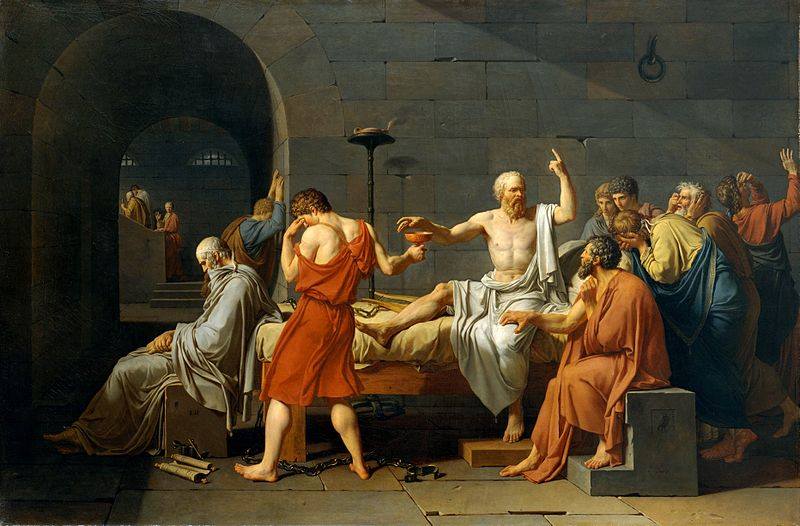
VALENTINE’S DAY REACH-OUT THAT GOES BEYOND CHOCOLATES!

VALENTINE’S DAY REACH-OUT THAT GOES BEYOND CHOCOLATES!

Please join us on Valentine’s Day, Friday, February 14th, by taking a few minutes anytime during the day, to reach out to someone you care about – in person or by phone, e-mail, text, or Skype. (It’s a way to express love and caring that’s better than a greeting card or chocolates!)

We got the idea from our colleagues in the U.K., where a million people participated in such one-to-one conversations on Feb. 6th, to challenge the stigma and discrimination around this subject. As the Brits say: We want to get more people talking about mental health than ever before. And we need your help to get there! We’d love you to be a part of the big conversation. Their beautiful website is:
http://www.time-to-change.org.uk, where you’ll find brief video vignettes of people doing this, how-to suggestions to assure your success, and answers to any questions you might have. Spending a few minutes there is an Instant Boost to your Emotional Intelligence!

Of course, mental health conditions often require professional care by expert, dedicated professionals — and one of our objectives is to make such care more available.

But all of us can contribute significantly by raising awareness, reducing the stigma — and offering, when it’s wanted, simple friendship, listening, caring, and empathy.

So please join us on Valentine’s Day by making meaningful contact with someone who would welcome your interest.

Of course we’d love to hear from you about your experience in this experiment in caring.

RELATIONSHIPS: The Good, The Bad, & The Ugly – Feb 12

RELATIONSHIPS:  The Good, The Bad, & The Ugly

Join us for food, drinks, and conversation.
Bring a question on relationships and your collective wisdom.
Short social before and in between rounds.
–Greet old friends and meet new ones.

RSVP at http://www.meetup.com/Conversations-New-York/events/155823962/

6:30   Social
7:00   Dinner and conversation
8:15   Social
8:45   Round 2 at a different table
9:45+ Closing statements.  Continue the conversation on your own.

Attire: Dress to impress.

Each conversationalist is encouraged to propose a question related to relationships.  Each table will determined the question for discussion by popular vote.  (Last year, “I found the questions just as interesting as the conversation.”)

The Statler Bar and Grill is reserving their very nice private dining room for us but they adding a 20% gratuity.   Separate checks available on request.  http://www.statlergrill.com/

Upcoming:
March – “Risk-taking”
April – “What makes your partner feel special?”
May – “Language of a Broken Heart”

About the Moderator:   Ron Gross is the founder of “Conversations New York.” He’s  been organizing exciting, important CONVERSATIONS for 20 years, and currently holds them regularly on the Columbia University campus and elsewhere through the city. He’s the author of 23 books on LIFELONG LEARNING.  He was recently honored for lifetime achievement in the field by the International Society for Self-Directed Learning. The late Buckminster Fuller said of Ron’s work: “If humanity is to pass safely through its present crisis on earth, it will be because a majority of individuals are now doing their own thinking. Ronald Gross’ work has pioneered in improving the climate for such thinking in the United States.”

CONVERSATIONS NEW YORK

Imagine
Hundreds of New Yorkers coming together in small groups of neighbors and fellow citizens to discuss topics of intensive interest…
Hosted at no cost and at convenient locations and times…
Aided by simple guiding principles…
Inspired by the city’s grand tradition of robust conversation…
Our vision is to inspire, organize, publicize, facilitate and celebrate a renaissance of healthy dialogue in New York City.

How You Can Help Us Grow!

If you would like to easily add to our strength, we’d be grateful for your taking these easy steps:
1. Visit us at https://conversationsnewyork.com/about-cny/ to learn more about us, subscribe to our website, and spread the word.
2. Share with us your reactions, questions, and suggestions about this venture. conversationsnewyork@gmail.com
3. ”Like” our organization on Facebook at https://www.facebook.com/ConversationsNewYork
4. Consider convening a Conversation yourself – our site will soon provide resources, but in the meantime just ask us.
5. Tell us about Conversations you think should be listed on our on-line calendar.  https://conversationsnewyork.com/calendar-of-conversations/
We hope you’re as excited as we are about promoting and encouraging stimulating conversations in New York City!

“The Power of Conversation” with Ronald Gross – Jan 27

The University Seminar on Innovation in Education
&
The University Seminar on Ethics, Moral Education, and Society
present

                                     The Power ofConversation

with
Ronald Gross
Co-chair, University Seminar on Innovation in Education;
Founder, Conversations New York.
Author, Socrates’ WayPeak Learning,  Radical School Reform, etc.

            Monday,  January 27, 2014, 7:00-9:00 pm

Faculty House, Columbia University, 117th St. & Morningside Heights

Kindly RSVP to reserve a place, or confirm your previous RSVP, to grossassoc@aol.com  and http://www.meetup.com/Conversations-New-York/events/157029602/

Please bring this invitation and a photo ID for admission to the building.
 
We experience the power of conversation at each session of our Seminars.  That power has propelled creative inquiry through the agesfrom Socrates’ dialogues in the Athenian agora, to Occupy in Zuccoti Park.  
 
Now, it is being harnessed to enhance  well-being and happiness,  foster civic discourse,strengthen learning (formal and informal),  stimulate organizational development, spark creativity, and other important goals.
 
This Seminar will:
Ø     Review the  life-affirming  benefits of Conversation as established by theory, research, and practice.  

Ø     Note how the historical tradition of conversationgroups (Salons, Coffee Houses, Building 20 at MIT, etc.), expressed the basic  impulse that   has given rise to Social Media today.
          Ø     Examine the “Retreat from Conversation” identified by Prof. Sherry Turkle of MIT and other social scientists.
          Ø    Report briefly on  exciting current projects and programs such as  Socrates Salons and  Cafes, Dinners to Talk About Death, Cafe Philos, Circles in Women’s Spirituality,  and the National Coalition for Dialogue and Deliberation.
Ø    Present the new program Conversations New York, and announce an invitational  mini-conference on Conversation at Columbia in July, which  our Seminars will sponsor.
Background Reading: Please visit the websites www.conversationsnewyork.com,www.socratesway.com
 and www.ncdd.com, and read Sherry Turkle’s article “The Flight fromConversation” from the New York Times Sunday Review, 4/21/12 (http://www.nytimes.com/2012/04/22/opinion/sunday/the-flight-from-conversation.html?_r=0 — or (just Google it).

To augment the fellowship among members, you are warmly invited to join other members for dinner at Faculty House at 5:30 PM.  Dinner at Faculty House, a varied and ample buffet (including wine), is $25, which must be paid for by check made    at the beginning of the meal.  If you intend to join us for dinner you must let us know via email a week in advance.
Faculty House is located on Columbia University’s East Campus on Morningside Drive, north of 116th Street.  Enter Wien Courtyard through the gates on 116 Street between Amsterdam Avenue and Morningside Drive. Walk toward the north end of the courtyard, then turn right toward Morningside Drive.  Faculty House will be the last building on the right.

Upcoming 2013-14 seminar dates: no Feb, Mar 3, Apr 7, May 5.

BACKGROUND: This seminar is jointly sponsored by the Columbia University Seminars on Innovation in Education, and on Ethics, Moral Education, and Society.
                    The Seminar on Innovation in Education is co-chaired by Ronald Gross, who also conducts the Socratic Conversations at the Gottesman Libraries, and Robert McClintock who is John L. and Sue Ann Weinberg Professor Emeritus in the Historical and Philosophical Foundations of Education at Teachers College. Founded in 1970, the Seminar explores the process of learning in individuals, organizations, and society throughout the lifespan and via major institutions.
                    The Seminar on Ethics, Moral Education and Society, chaired by Michael Schulman,  brings together scholars from psychology, philosophy, sociology, political theory, education, religion and other disciplines to explore issues in ethics, moral education, moral development, moral motivation, moral decision making and related topics.
                    Upcoming 2013-14 seminar dates: no Feb, Mar 3, Apr 7, May 5.
                    Columbia University encourages persons with disabilities to participate in its programs and activities.  University Seminar participants with disabilities who anticipate needing accommodations or who have questions about physical access may contact the Office of Disability Services at 212-854-2388 or disability@columbia.edu.  Disability accommodations, including sign-language interpreters, are available on request.  Requests for accommodations must be made two weeks in advance.  On campus, seminar participants with disabilities should alert a Public Safety Officer that they need assistance accessing campus.
                        _________________________________________________________________
                        Michael Schulman, chair, Ethics, Moral Education, and Society,mdschlmn41@yahoo.com
                        Ron Gross, co-chair, Innovation in Education, grossassoc@aol.com

Feeding Your Flame: A “Campfire Conversation” to Fuel Your 2014 Resolutions – Jan 23

Feeding Your Flame:
A “Campfire Conversation” to Fuel Your 2014 Resolutions

Socratic Conversation with Ron Gross

Thursday, January 23rd, 4:00 sharp – 5:15

Gottesman Library, Teachers College, Columbia University

525 West 120th St. 2nd Floor Conversation Area (bet. Broadway and Amsterdam Ave. North side of 120th Street.) (#1 train to 116th St.)

Please bring a photo ID required for entry to the building.

Kindly RSVP to reserve a place, to grossassoc@aol.com .  Thank you.

There will be a display of relevant books. Light refreshments will be available. Coffee and other beverages available downstairs as you enter the building. Socrates traditionally gathered his friends around a blazing outdoor campfire at the beginning of the Athenian New Year, opened a couple of bottles of wine, and presented five of his famous Questions to stir their thinking and renew their energies.

Let’s gather to follow in the footsteps of the Gadfly, by discussing where we’ve been this past year, where we are now, and what we want to move towards in the year ahead.

Voicing your own answers will strengthen your resolve – and hearing the answers of others will widen your awareness of possibilities for yourself.

Come share your thoughts on these Five Questions of Socrates:

1. What accomplishments from 2013 do you want to celebrate? These could be breakthroughs, things you said or did, new behaviors or thoughts. By celebrating what was good about the year, we honor our efforts and those who helped us along the way.

2. What’s an important lesson you learned in 2013? This is a way to make sense of our struggles, frustrations, anguish. Let’s capture and share some of our life-learnings.

3. What are you grateful for? Gratitude increases our awareness of the resources available to us, at any moment.

4. What do you most want for the coming year? You’ll be invited to pick a theme for the year, if you like, as in “The Year of …..” Let’s set our intention for what we want to manifest, a major target for the arrows we will launch throughout the year.

5. What commitment are you ready to make? To get what we want often requires removing obstacles and moving into new territory. What is in the way that you are ready to give up? It might be being right or doing it alone. When you commit, the whole world opens up. Not always in the way you expect, your commitment opens doors.

If we meet here one year from today,
what would you most like to report
about what happened in your life from now til then?

Please join us to re-focus on what really matters for the New Year! Bring your own energy — and you’ll leave with more from others! Together, we’ll nurture the seeds for the best 2014 you could possibly have.

1618434_587019884726367_1079857487_n

CONVERSATIONS NEW YORK

What You Can Do Now:

Follow CNY at http://www.conversationsnewyork.com.

Like us on Facebook at http://www.facebook.com/conversationsnewyork.

Find us at Meetup at http://www.meetup.com/Conversations-New-York/
Want to Join the CNY team?: We have opportunities for professionals with relevant skills to contribute pro bono to the development of CNY in several important areas:

Editorial

Calendar-development

Funding

Media Relations/Social Networking

Venue-finding and Evaluation

IT/Operations

Legal

We are also seeking organizational partners and funding, from public and private agencies who share our interest in fostering a richer cultural life in NYC.

Re-Designing New York City What Are Your Ideas? – Dec 12

Re-Designing  New York City
What Are Your Ideas?
Socratic Conversation with Ron Gross
Thursday,  Dec. 12,  4:00 sharp – 5:15 pm
Gottesman Library, Teachers College, Columbia University, 525 West 120th St.
(bet. Broadway and Amsterdam Ave.  North side of 120th Street — Take  the #1 train to 116th St.) 
2nd floor Conversation Lounge
Please bring a photo ID required for entry to the building.
RSVP to reserve a place.  http://www.meetup.com/Conversations-New-York/events/152911082/
There will be a display of relevant books, and light refreshments
(Coffee etc.are  available  for purchase 
at the Cafe on your right as you enter the Library on the first floor)
 
Your life in New York City will be effected by the new Mayoral administration.   Here’s your chance to have your say.  What are your ideas for helping all of us to live together more enjoyably,  healthfully, safely, and productively?
 
The Talking Transition Project(http://talkingtransitionnyc.com/)* has invited us to discuss our future.  Such conversations have been taking place online, in the streets, at libraries throughout the city,  and in a big white tent thrown up Canal Street and Varick after the election (now closed).  
 
Mayor-Elect de Blasio has shown keen interest in the ideas coming out of these conversations, saying: “If you give people a chance to offer their ideas, you’ll find an extraordinary number of New Yorkers who have positive, productive ideas.”
 
To continue that discussion on the Teachers College campus, we invite YOUR thoughts, ideas, and suggestions:
 
What changes would you like to see in the area of city living of most interest to you?….e.g., our streets, parks, schools and colleges,  healthcare, local businesses, housing, immigrant integration, environment, law enforcement, rules, regulations, and priorities for spending public funds?

Output from our Conversation will be displayed afterwards at the Gottesman Library, to stimulate on-going discussion on campus, and will be transmitted to the transitions team.

 
Suggested Readings (optional):  If Mayors Ruled the World, by Benjamin Barber; Happy City by Charles Montgomery; Who’s Your City? and/or The Flight of the Creative Class,  by Richard Florida; and“Invisible Child” — series of articles appearing daily this week in theNew York Times — today’s installment, “A Future Resting on a Fragile Foundation,” on p. 1)
 
*The project is not a part of the de Blasio administration, but is an initiative of a group of foundations led by George Soros’ Open Society Program.

For more information about the Socratic Conversations: www.SocratesWay.com/join.html.
NEXT CONVERSATION: Thursday, Jan. 23, 2014.

Dialogues on the Soul – Nov 21

Dialogues on the Soul
Hosted by Frank Purcell
Thursday, November 21, 2013, 7:00 PM, Midtown

Kindly RSVP at http://www.meetup.com/Conversations-New-York/events/150894292/

What is soul? Do we have soul? Do the lower animals? Plants? Do we survive the death of the body? Does music feed the soul? Poetry? Philosophy? Dance? How do we live the life of soul more fully? What role does or can religion play in the life of the soul?

Do We Have Souls? – Nov 7

DO WE HAVE SOULS?
Socratic Conversation with Ron Gross

Thursday, Nov. 7, 4:00 – 5:15 pm

Gottesman Library, Teachers College, Columbia University, 525 West 120th St.
(bet. Broadway and Amsterdam Ave. North side of 120th Street.)

(#1 train to 116th St.)
(Note Change)  Second floor lounge
Please bring a photo ID required for entry to the building.
RSVP to GrossAssoc@aol.com to reserve a place and at meetup http://www.meetup.com/Conversations-New-York/events/148213942/

There will be a display of relevant books. Light refreshments will be available.
Coffee and other beverages available downstairs as you enter the building.

Does each of us have an enduring core as a person, irreducible to our physical beings, and the source of some of our most valued capabilities? The belief that we do, has been held by most human beings throughout the ages and in virtually every culture. But that belief has dwindled among a great many people in Western Europe and America.

Now, some leading scientists and religious thinkers are bringing it back. What do you think? We will explore how emerging insights relate to our own convictions, feelings, and questions.

For example, some evolutionary biologists are speculating that a person’s soul is the information in his or her DNA. Others working in humanistic traditions, like Joseph Campbell, Scott Peck, and Harry Moody, have delineated stages of spiritual growth through which they contend that our souls develop. Here at Columbia, the idea of a “distributed soul” which inheres in relationships between people, rather than within each individual, has been proposed by Prof. Robert Pollack of the Center for the Study of Science and Religion.

We will explore the many different ways in which the word Soul is used, ranging from the Chicken Soup for the Soul series of best-selling self-help books, to referring to the “souls” of nations or organizations or even technologies*, to using the term “Great Souls” to describe outstanding people like Gandhi or Martin Luther King.

Please join us to share your views on questions and issues such as:

Ø Is the idea that we have souls meaningful in your own philosophy of life?

Ø Does your heritage (religious/cultural/ethnic) have a concept of “souls” that is important to you? (Almost all do.)

Ø How do you feel about the idea of “seeking one’s soul-mate”?

Ø Do you believe that the spirits of loved ones who’ve passed away, endure somehow?

Ø Does the way you live your life, and the key decisions you make, form your soul? Do we have souls which change for better or worse in the course of our lives? Can some ways of working or living, corrode your soul?

Suggested Reading or Viewing (optional): Do We Have Souls?, by Tim O’Connor, at https://www.bigquestionsonline.com/print/180
Ghost in the Machine: Is There a Soul?, on Youtube at

The Soul Hypothesis: Investigations Into the Existence of the Soul, Edited by Mark C. Baker and Stewart Goetz
The Five Stages of the Soul: Charting the Spiritual Passages That Shape Our Lives, by Harry R., Moody and David Carroll.

*”Design is the fundamental soul of a man-made creation that ends up expressing itself in successive outer layers of the product or service.” Steve Jobs, founder of Apple.

Cosmopolitanism: What Does It Mean to be a Citizen of the World? – Nov 11

The University Seminar on Innovation in Education 
and
The University Seminar on Ethics, Moral Education, and Society
Present


Cosmopolitanism:

What Does It Mean to be a Citizen of the World?

 
Speaker: Prof. David Hansen,
John L. & Sue Ann Weinberg Professor  in the  Historical & Philosophical Foundations of Education,
Teachers College, Columbia, and author, THE TEACHER AND THE WORLD:  A Study of Cosmopolitanism as Education
 

               Monday, November 11, 2013,  7:00-9:00 pm

Gottesman Library, Teachers College, Room 305 Russell Hall
525 West 120th St., bet. Broadway and Amsterdam Ave.; 116th street stop on the #1 train
(NOT at Faculty House!)
Please bring this invitation and a photo ID for admission to the building.
RSVP to reserve a place.

In recent years, the ancient and perennial idea of Cosmopolitanism has been reanimated by scholars in both the social sciences and humanities – including one of our former guest speakers, Kwame Appiah.  They discern in the idea, ways in which people today can respond creatively to rapid social, political, cultural, and economic transformations.
This outlook has deep philosophical roots  —  from Socrates and the 5th century Greek Stoics who coined the term to declare that they were “citizens of the world,” through the universalist ambitions of the great monotheistic religions, to philosophers like Immanuel Kant, and in our day Levinas, Derrida, Appiah, Nussbaum, Barber, Bok, Sen, and Walzer.
In his book The Teacher and the World: A Study of Cosmopolitanism as Education,  David T. Hansen,  the John L. & Sue Ann Weinberg Professor in the  Historical & Philosophical Foundations of Education, proposes that a Cosmopolitan-minded orientation can empower us to address both the challenges and opportunities of our era.
Prof. Hansen provides us with “ideas that can help us do our work and hold true to our values in the face of all the pressures of globalization which bear down hard on teachers everywhere.”  He observes critically that “globalization” reduces humankind to  “human capital” and “emphasizes economic life over the rest of human life” with a premium on production.

Hansen’s vision is to help us all to  learn to deal with changes creatively and responsively rather than in a reactive way, and “to make the world today a place of learning.”

Dinner: To augment the fellowship among members this year, you are warmly invited to join other members for dinner at Faculty House at 5:30 PM, after which we will walk to  Teachers College for the Seminar, as indicated above.  Dinner at Faculty House, a varied and ample  buffet (including wine), is $25, which must be paid for by check made out to Columbia University with “dinner” and Seminar 511 noted in the memo line.  We will collect checks at the beginning of the meal. If you intend to join us for dinner you must let us know via email a week in advance.
Faculty House is located on Columbia University’s East Campus on Morningside Drive, north of 116th Street.  Enter Wien Courtyard through the gates on 116 Street between Amsterdam Avenue and Morningside Drive. Walk toward the north end of the courtyard, then turn right toward Morningside Drive.  Faculty House will be the last building on the right.  PLEASE BRING A PHOTO ID FOR ADMITTANCE TO THE BUILDING.
BACKGROUND: This seminar is jointly sponsored by the Columbia University Seminars on Innovation in Education, and on Ethics, Moral Education, and Society.
The Seminar on Innovation in Education is co-chaired by Ronald Gross, who also conducts the Socratic Conversations at the Gottesman Libraries, and Robert McClintock who is John L. and Sue Ann Weinberg Professor Emeritus in the Historical and Philosophical Foundations of Education at Teachers College. Founded in 1970, the Seminar explores the process of learning in individuals, organizations, and society throughout the lifespan and via major institutions.
,The Seminar on Ethics, Moral Educationand Society, chaired by Michael Schulman,  brings together scholars from psychology, philosophy, sociology, political theory, education, religion and other disciplines to explore issues in ethics, moral education, moral development, moral motivation, moral decision making and related topics.
    Upcoming 2013-14 seminar dates: Dec 9 on Global Obama,  Jan 27 on The Power of Conversation,  no Feb, Mar 3, Apr 7, May 5.
Columbia University encourages persons with disabilities to participate in its programs and activities.  University Seminar participants with disabilities who anticipate needing accommodations or who have questions about physical access may contact the Office of Disability Services at 212-854-2388 or disability@columbia.edu.  Disability accommodations, including sign-language interpreters, are available on request.  Requests for accommodations must be made two weeks in advance.  On campus, seminar participants with disabilities should alert a Public Safety Officer that they need assistance accessing campus.
    _________________________________________________________________
    Michael Schulman, chair, Ethics, Moral Education, and Society, mdschlmn41@yahoo.com

Ron Gross, co-chair, Innovation in Education, grossassoc@aol.com
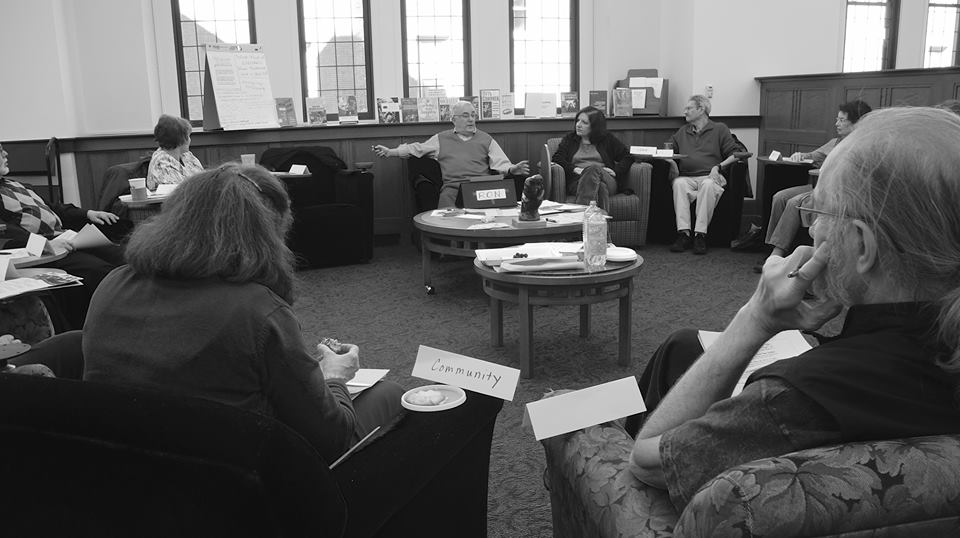
COSMOPOLITANISM: What Does It Mean to be a Citizen of the World? – Oct 24

Just a final reminder — no changes in the arrangements:

Cosmopolitanism:

What Does It Mean to be a Citizen of the World?

Socratic Conversation with Ron Gross


Thursday, 10/24, 4-5:15pm
(United Nations Day)

Gottesman Library, 525 West 120th St., Room 104b
(inside Library, way in the back — NOT on 2nd floor as usual)

RSVP at http://www.meetup.com/Conversations-New-York/events/143590872/

There will be a display of relevant books.
Light refreshments will be available. Coffee is available for purchase in the Cafe as you enter the building
Please be sure to bring a photo ID for entrance to the building.

What Does It Mean to be a “Citizen of the World”…

* Morally,

* Economically,

* Politically,

* Culturally/Artistically

* Ecologically

* Linguistically, and….

* _______________?!

Increasingly, we are tending to think of ourselves and our circumstances in global terms. The outlook is driven by emergent political/technological conditions, such as:

  • the perils to the planet as a whole,
  • telecommunications and the Internet,
  • global institutions such as agencies of the UN, WTO, and transnational corporations (“Globalization”),
  • the revelations of genetic biology about our shared humanity,
  • the interpenetration of nationalities, ethnicities, languages, and the arts (Multi-culturalism),
  • internationalization of our languages with borrowings from one to another (“blog”, etc.)
  • trans-cultural ways of thinking, planning, and problem-solving such as Design Thinking and Comprehensive Design

But this outlook has deep philosophical roots -from the 5th century Greek Stoics, through universalist ambitions of the great monotheistic religions, to philosophers like Immanuel Kant, and in our day Levinas, Derrida, and Appiah. As Socrates declared famously: “I am a proud citizen of Athens, and a determined defender of Hellas – but I am also a citizen of the world.”

Cosmopolitanism is the classic term for the conviction or ideal that all human ethnic groups belong to a single community based on a shared morality, economic relationship, or political structure. We’ll explore the ways in which each of US thinks of himself or herself in Cosmopolitan terms, the forces that are strengthening this outlook, and the benefits and perils (Will Globalization eat your job?).

Suggested readings (optional): The Teacher and the World: A Study of Cosmopolitanism as Education, David Hansen (Routledge, 2011); Cosmopolitanism, Kwame Appiah (Norton, 2006)

Next conversation: Thursday, 11/7, Topic to be announced.

Inspired by Socrates’ famous conversations with his friends in the marketplace of 5th century Athens, we engage in spirited discussions of ideas and issues. Socratic conversations range broadly and probe deeply into the basic challenges of life. They are informed by the latest literature for reference and follow up. While building a sense of community on campus, these meetings enliven the intellectual atmosphere and model dialogue and discussion as modes of inquiry. They are part of a year long series of Socratic Conversations hosted by the Gottesman Libraries.

These highly-participatory conversations are moderated by Ronald Gross, author of Socrates’ Way and Co-chair of the University Seminar on Innovation in Education.

Cosmopolitanism: What Does It Mean to be a Citizen of the World? Oct 24

Cosmopolitanism:
What Does It Mean to be a Citizen of the World?


Socratic Conversation with Ron Gross,


Thursday, 10/24, 4-5:15pm
(United Nations Day)

Gottesman Library, 525 West 120th St., Room 104b
(inside Library, way in the back — NOT 2nd floor as usual)

There will be a display of relevant books.
Light refreshments will be available. Coffee is available for purchase in the Cafe as you enter the building
Please be sure to bring a photo ID for entrance to the building.

RSVP to GrossAssoc

and at meetup.com
http://www.meetup.com/Conversations-New-York/events/143590872/

What Does It Mean to be a "Citizen of the World"…

* Morally,

* Economically,

* Politically,

* Culturally/Artistically

* Ecologically

* Linguistically, and….

* _______________?!

Increasingly, we are tending to think of ourselves and our circumstances in global terms. The outlook is driven by emergent political/technological conditions, such as:

  • the perils to the planet as a whole,
  • telecommunications and the Internet,
  • global institutions such as agencies of the UN, WTO, and transnational corporations ("Globalization"),
  • the revelations of genetic biology about our shared humanity,
  • the interpenetration of nationalities, ethnicities, languages, and the arts (Multi-culturalism),
  • internationalization of our languages with borrowings from one to another ("blog", etc.)
  • trans-cultural ways of thinking, planning, and problem-solving such as Design Thinking and Comprehensive Design

But this outlook has deep philosophical roots -from the 5th century Greek Stoics, through universalist ambitions of the great monotheistic religions, to philosophers like Immanuel Kant, and in our day Levinas, Derrida, and Appiah. As Socrates declared famously: "I am a proud citizen of Athens, and a determined defender of Hellas – but I am also a citizen of the world."

Cosmopolitanism is the classic term for the conviction or ideal that all human ethnic groups belong to a single community based on a shared morality, economic relationship, or political structure. We’ll explore the ways in which each of US thinks of himself or herself in Cosmopolitan terms, the forces that are strengthening this outlook, and the benefits and perils (Will Globalization eat your job?).

Suggested readings (optional): The Teacher and the World: A Study of Cosmopolitanism as Education, David Hansen (Routledge, 2011); Cosmopolitanism, Kwame Appiah (Norton, 2006)

Next conversation: Thursday, 11/7, Topic TBA

Inspired by Socrates’ famous conversations with his friends in the marketplace of 5th century Athens, we engage in spirited discussions of ideas and issues. Socratic conversations range broadly and probe deeply into the basic challenges of life. They are informed by the latest literature for reference and follow up. While building a sense of community on campus, these meetings enliven the intellectual atmosphere and model dialogue and discussion as modes of inquiry. They are part of a year long series of Socratic Conversations hosted by the Gottesman Libraries.

These highly-participatory conversations are moderated by Ronald Gross, author of Socrates’ Way and Co-chair of the University Seminar on Innovation in Education.