Dialogues on the Soul – Nov 21

Dialogues on the Soul
Hosted by Frank Purcell
Thursday, November 21, 2013, 7:00 PM, Midtown

Kindly RSVP at http://www.meetup.com/Conversations-New-York/events/150894292/

What is soul? Do we have soul? Do the lower animals? Plants? Do we survive the death of the body? Does music feed the soul? Poetry? Philosophy? Dance? How do we live the life of soul more fully? What role does or can religion play in the life of the soul?

Do We Have Souls? – Nov 7

DO WE HAVE SOULS?
Socratic Conversation with Ron Gross

Thursday, Nov. 7, 4:00 – 5:15 pm

Gottesman Library, Teachers College, Columbia University, 525 West 120th St.
(bet. Broadway and Amsterdam Ave. North side of 120th Street.)

(#1 train to 116th St.)
(Note Change)  Second floor lounge
Please bring a photo ID required for entry to the building.
RSVP to GrossAssoc@aol.com to reserve a place and at meetup http://www.meetup.com/Conversations-New-York/events/148213942/

There will be a display of relevant books. Light refreshments will be available.
Coffee and other beverages available downstairs as you enter the building.

Does each of us have an enduring core as a person, irreducible to our physical beings, and the source of some of our most valued capabilities? The belief that we do, has been held by most human beings throughout the ages and in virtually every culture. But that belief has dwindled among a great many people in Western Europe and America.

Now, some leading scientists and religious thinkers are bringing it back. What do you think? We will explore how emerging insights relate to our own convictions, feelings, and questions.

For example, some evolutionary biologists are speculating that a person’s soul is the information in his or her DNA. Others working in humanistic traditions, like Joseph Campbell, Scott Peck, and Harry Moody, have delineated stages of spiritual growth through which they contend that our souls develop. Here at Columbia, the idea of a “distributed soul” which inheres in relationships between people, rather than within each individual, has been proposed by Prof. Robert Pollack of the Center for the Study of Science and Religion.

We will explore the many different ways in which the word Soul is used, ranging from the Chicken Soup for the Soul series of best-selling self-help books, to referring to the “souls” of nations or organizations or even technologies*, to using the term “Great Souls” to describe outstanding people like Gandhi or Martin Luther King.

Please join us to share your views on questions and issues such as:

Ø Is the idea that we have souls meaningful in your own philosophy of life?

Ø Does your heritage (religious/cultural/ethnic) have a concept of “souls” that is important to you? (Almost all do.)

Ø How do you feel about the idea of “seeking one’s soul-mate”?

Ø Do you believe that the spirits of loved ones who’ve passed away, endure somehow?

Ø Does the way you live your life, and the key decisions you make, form your soul? Do we have souls which change for better or worse in the course of our lives? Can some ways of working or living, corrode your soul?

Suggested Reading or Viewing (optional): Do We Have Souls?, by Tim O’Connor, at https://www.bigquestionsonline.com/print/180
Ghost in the Machine: Is There a Soul?, on Youtube at

The Soul Hypothesis: Investigations Into the Existence of the Soul, Edited by Mark C. Baker and Stewart Goetz
The Five Stages of the Soul: Charting the Spiritual Passages That Shape Our Lives, by Harry R., Moody and David Carroll.

*”Design is the fundamental soul of a man-made creation that ends up expressing itself in successive outer layers of the product or service.” Steve Jobs, founder of Apple.

Cosmopolitanism: What Does It Mean to be a Citizen of the World? – Nov 11

The University Seminar on Innovation in Education 
and
The University Seminar on Ethics, Moral Education, and Society
Present


Cosmopolitanism:

What Does It Mean to be a Citizen of the World?

 
Speaker: Prof. David Hansen,
John L. & Sue Ann Weinberg Professor  in the  Historical & Philosophical Foundations of Education,
Teachers College, Columbia, and author, THE TEACHER AND THE WORLD:  A Study of Cosmopolitanism as Education
 

               Monday, November 11, 2013,  7:00-9:00 pm

Gottesman Library, Teachers College, Room 305 Russell Hall
525 West 120th St., bet. Broadway and Amsterdam Ave.; 116th street stop on the #1 train
(NOT at Faculty House!)
Please bring this invitation and a photo ID for admission to the building.
RSVP to reserve a place.

In recent years, the ancient and perennial idea of Cosmopolitanism has been reanimated by scholars in both the social sciences and humanities – including one of our former guest speakers, Kwame Appiah.  They discern in the idea, ways in which people today can respond creatively to rapid social, political, cultural, and economic transformations.
This outlook has deep philosophical roots  —  from Socrates and the 5th century Greek Stoics who coined the term to declare that they were “citizens of the world,” through the universalist ambitions of the great monotheistic religions, to philosophers like Immanuel Kant, and in our day Levinas, Derrida, Appiah, Nussbaum, Barber, Bok, Sen, and Walzer.
In his book The Teacher and the World: A Study of Cosmopolitanism as Education,  David T. Hansen,  the John L. & Sue Ann Weinberg Professor in the  Historical & Philosophical Foundations of Education, proposes that a Cosmopolitan-minded orientation can empower us to address both the challenges and opportunities of our era.
Prof. Hansen provides us with “ideas that can help us do our work and hold true to our values in the face of all the pressures of globalization which bear down hard on teachers everywhere.”  He observes critically that “globalization” reduces humankind to  “human capital” and “emphasizes economic life over the rest of human life” with a premium on production.

Hansen’s vision is to help us all to  learn to deal with changes creatively and responsively rather than in a reactive way, and “to make the world today a place of learning.”

Dinner: To augment the fellowship among members this year, you are warmly invited to join other members for dinner at Faculty House at 5:30 PM, after which we will walk to  Teachers College for the Seminar, as indicated above.  Dinner at Faculty House, a varied and ample  buffet (including wine), is $25, which must be paid for by check made out to Columbia University with “dinner” and Seminar 511 noted in the memo line.  We will collect checks at the beginning of the meal. If you intend to join us for dinner you must let us know via email a week in advance.
Faculty House is located on Columbia University’s East Campus on Morningside Drive, north of 116th Street.  Enter Wien Courtyard through the gates on 116 Street between Amsterdam Avenue and Morningside Drive. Walk toward the north end of the courtyard, then turn right toward Morningside Drive.  Faculty House will be the last building on the right.  PLEASE BRING A PHOTO ID FOR ADMITTANCE TO THE BUILDING.
BACKGROUND: This seminar is jointly sponsored by the Columbia University Seminars on Innovation in Education, and on Ethics, Moral Education, and Society.
The Seminar on Innovation in Education is co-chaired by Ronald Gross, who also conducts the Socratic Conversations at the Gottesman Libraries, and Robert McClintock who is John L. and Sue Ann Weinberg Professor Emeritus in the Historical and Philosophical Foundations of Education at Teachers College. Founded in 1970, the Seminar explores the process of learning in individuals, organizations, and society throughout the lifespan and via major institutions.
,The Seminar on Ethics, Moral Educationand Society, chaired by Michael Schulman,  brings together scholars from psychology, philosophy, sociology, political theory, education, religion and other disciplines to explore issues in ethics, moral education, moral development, moral motivation, moral decision making and related topics.
    Upcoming 2013-14 seminar dates: Dec 9 on Global Obama,  Jan 27 on The Power of Conversation,  no Feb, Mar 3, Apr 7, May 5.
Columbia University encourages persons with disabilities to participate in its programs and activities.  University Seminar participants with disabilities who anticipate needing accommodations or who have questions about physical access may contact the Office of Disability Services at 212-854-2388 or disability@columbia.edu.  Disability accommodations, including sign-language interpreters, are available on request.  Requests for accommodations must be made two weeks in advance.  On campus, seminar participants with disabilities should alert a Public Safety Officer that they need assistance accessing campus.
    _________________________________________________________________
    Michael Schulman, chair, Ethics, Moral Education, and Society, mdschlmn41@yahoo.com

Ron Gross, co-chair, Innovation in Education, grossassoc@aol.com
COSMOPOLITANISM: What Does It Mean to be a Citizen of the World? – Oct 24

Just a final reminder — no changes in the arrangements:

Cosmopolitanism:

What Does It Mean to be a Citizen of the World?

Socratic Conversation with Ron Gross


Thursday, 10/24, 4-5:15pm
(United Nations Day)

Gottesman Library, 525 West 120th St., Room 104b
(inside Library, way in the back — NOT on 2nd floor as usual)

RSVP at http://www.meetup.com/Conversations-New-York/events/143590872/

There will be a display of relevant books.
Light refreshments will be available. Coffee is available for purchase in the Cafe as you enter the building
Please be sure to bring a photo ID for entrance to the building.

What Does It Mean to be a “Citizen of the World”…

* Morally,

* Economically,

* Politically,

* Culturally/Artistically

* Ecologically

* Linguistically, and….

* _______________?!

Increasingly, we are tending to think of ourselves and our circumstances in global terms. The outlook is driven by emergent political/technological conditions, such as:

  • the perils to the planet as a whole,
  • telecommunications and the Internet,
  • global institutions such as agencies of the UN, WTO, and transnational corporations (“Globalization”),
  • the revelations of genetic biology about our shared humanity,
  • the interpenetration of nationalities, ethnicities, languages, and the arts (Multi-culturalism),
  • internationalization of our languages with borrowings from one to another (“blog”, etc.)
  • trans-cultural ways of thinking, planning, and problem-solving such as Design Thinking and Comprehensive Design

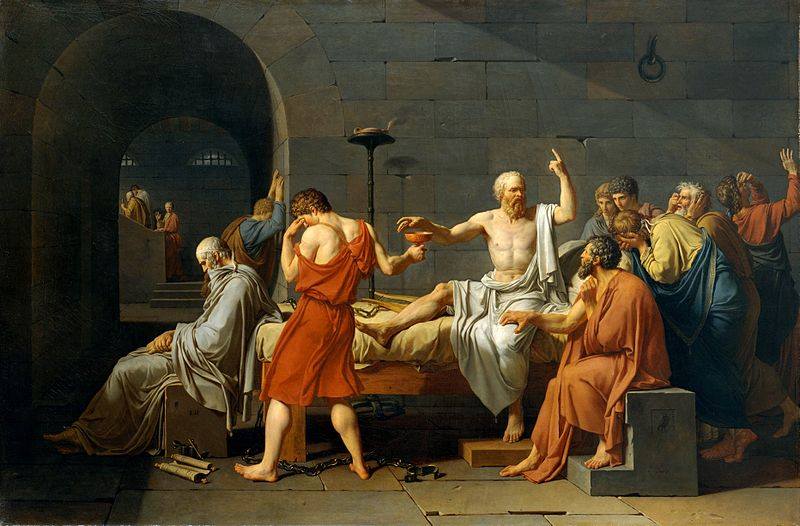
But this outlook has deep philosophical roots -from the 5th century Greek Stoics, through universalist ambitions of the great monotheistic religions, to philosophers like Immanuel Kant, and in our day Levinas, Derrida, and Appiah. As Socrates declared famously: “I am a proud citizen of Athens, and a determined defender of Hellas – but I am also a citizen of the world.”

Cosmopolitanism is the classic term for the conviction or ideal that all human ethnic groups belong to a single community based on a shared morality, economic relationship, or political structure. We’ll explore the ways in which each of US thinks of himself or herself in Cosmopolitan terms, the forces that are strengthening this outlook, and the benefits and perils (Will Globalization eat your job?).

Suggested readings (optional): The Teacher and the World: A Study of Cosmopolitanism as Education, David Hansen (Routledge, 2011); Cosmopolitanism, Kwame Appiah (Norton, 2006)

Next conversation: Thursday, 11/7, Topic to be announced.

Inspired by Socrates’ famous conversations with his friends in the marketplace of 5th century Athens, we engage in spirited discussions of ideas and issues. Socratic conversations range broadly and probe deeply into the basic challenges of life. They are informed by the latest literature for reference and follow up. While building a sense of community on campus, these meetings enliven the intellectual atmosphere and model dialogue and discussion as modes of inquiry. They are part of a year long series of Socratic Conversations hosted by the Gottesman Libraries.

These highly-participatory conversations are moderated by Ronald Gross, author of Socrates’ Way and Co-chair of the University Seminar on Innovation in Education.

Cosmopolitanism: What Does It Mean to be a Citizen of the World? Oct 24

Cosmopolitanism:
What Does It Mean to be a Citizen of the World?


Socratic Conversation with Ron Gross,


Thursday, 10/24, 4-5:15pm
(United Nations Day)

Gottesman Library, 525 West 120th St., Room 104b
(inside Library, way in the back — NOT 2nd floor as usual)

There will be a display of relevant books.
Light refreshments will be available. Coffee is available for purchase in the Cafe as you enter the building
Please be sure to bring a photo ID for entrance to the building.

RSVP to GrossAssoc

and at meetup.com
http://www.meetup.com/Conversations-New-York/events/143590872/

What Does It Mean to be a "Citizen of the World"…

* Morally,

* Economically,

* Politically,

* Culturally/Artistically

* Ecologically

* Linguistically, and….

* _______________?!

Increasingly, we are tending to think of ourselves and our circumstances in global terms. The outlook is driven by emergent political/technological conditions, such as:

  • the perils to the planet as a whole,
  • telecommunications and the Internet,
  • global institutions such as agencies of the UN, WTO, and transnational corporations ("Globalization"),
  • the revelations of genetic biology about our shared humanity,
  • the interpenetration of nationalities, ethnicities, languages, and the arts (Multi-culturalism),
  • internationalization of our languages with borrowings from one to another ("blog", etc.)
  • trans-cultural ways of thinking, planning, and problem-solving such as Design Thinking and Comprehensive Design

But this outlook has deep philosophical roots -from the 5th century Greek Stoics, through universalist ambitions of the great monotheistic religions, to philosophers like Immanuel Kant, and in our day Levinas, Derrida, and Appiah. As Socrates declared famously: "I am a proud citizen of Athens, and a determined defender of Hellas – but I am also a citizen of the world."

Cosmopolitanism is the classic term for the conviction or ideal that all human ethnic groups belong to a single community based on a shared morality, economic relationship, or political structure. We’ll explore the ways in which each of US thinks of himself or herself in Cosmopolitan terms, the forces that are strengthening this outlook, and the benefits and perils (Will Globalization eat your job?).

Suggested readings (optional): The Teacher and the World: A Study of Cosmopolitanism as Education, David Hansen (Routledge, 2011); Cosmopolitanism, Kwame Appiah (Norton, 2006)

Next conversation: Thursday, 11/7, Topic TBA

Inspired by Socrates’ famous conversations with his friends in the marketplace of 5th century Athens, we engage in spirited discussions of ideas and issues. Socratic conversations range broadly and probe deeply into the basic challenges of life. They are informed by the latest literature for reference and follow up. While building a sense of community on campus, these meetings enliven the intellectual atmosphere and model dialogue and discussion as modes of inquiry. They are part of a year long series of Socratic Conversations hosted by the Gottesman Libraries.

These highly-participatory conversations are moderated by Ronald Gross, author of Socrates’ Way and Co-chair of the University Seminar on Innovation in Education.

DESIGN THINKING to Improve Your Life, Your Work, & Our Society – Sep 19

Socratic Conversation with Ron Gross

Thursday, September 19th, 4:00 – 5:15 pm

Gottesman Library, Teachers College, Columbia University 525 West 120th St. Room 104b Russell Hall NOTE: Not our usual meeting space – different floor in the same building. (bet. Broadway and Amsterdam Ave. North side of 120th Street.) (#1 train to 116th St.) Please bring a photo ID required for entry to the building.

RSVP at http://www.meetup.com/Conversations-New-York/events/124333282/

There will be a display of relevant books. Light refreshments will be available. Coffee and other beverages available downstairs as you enter the building.

Design Thinking has produced some of the most successful innovations in our lives and organizations, in realms ranging from technology to social change. In this Conversation we will explore what DT can mean for each of us, personally and professionally. You are already a Designer in your life and work – if you use your creativity, resourcefulness, and initiative to make changes in yourself and your environment. But you can become an even better Designer by enlarging your repertoire of techniques and strategies. We’ll get acquainted with the DT Toolkit for being creative-with-a-purpose, ranging from brain-storming, mind-mapping, and creative problem-solving, to the 5 whys, the systems approach, and failing fast through proto-typing. DT harnesses both creativity and rationality – it inspires, but crunches! It fosters empathy for people — but also encourages awareness of the systemic context. It strives to meld theory and practice. It is knowledge-based — but solution-focused, rather than purely academic. It has a "bias towards action". Indeed, we practice DT each time we gather for one of these Conversations, which are collaborative, free-flowing, egalitarian, culturally diverse, inter-disciplinary, critical, exploratory, and open-ended. Please join us to experience Design Thinking yourself if you haven’t already (or share your experiences with some of the strategies), and discuss how this approach can add to your strength.

To benefit from and contribute to this session, please spend 15 minutes watching the short (2-minute) videos at www.designthinkingforeducators.com and, if you like, download the FREE (but long) Handbook

Next session: Thursday, 10/24, Topic, TBA For more information about the Socratic Conversations: www.SocratesWay.com/join.html

Money Talks: Profits Before Patient Safety – Sep 11

Money Talks – Profits Before Patient Safety
(Hosted by DOCUMENTARY WATCHERS & CNY)

Wednesday, September 11, 2013

6:30 PM to 9:15 PM, Kips Bay, New York

Please RSVP at Conversations New York http://www.meetup.com/Conversations-New-York/events/116947002/ and at Documentary Watchers. http://www.meetup.com/documentary/events/129399402 Thank you.

Dr. Jerome Hoffman, UCLA Medical School, “The relationship between physicians and the drug industry…begins the day you hit medical school…establishing relationship, establishing good feelings, and a dependency, and a sense of entitlement, that I work really really hard and no one is else is really nice to me, but these guys are really nice to me, and at the same time the notion that we are all in
this together…We are all on the same side. The side fighting against disease.”

Jeanne Lenzer, Investigative Medical Journalist, “…doctors started to telling me these stories about drug and therapies that they were prescribing,…they were horrified…they would find out that these therapies, one after another was actually causing more harm than good…in some instances killing patients…increasingly, of course, it shows pharmaceutical influence.”

Join us for food, drinks, and discussion.
Short social before start
Greet old friends and meet new ones.

6:30pm Social
6:45 Showing
7:45 Small group and large group discussions
9:15+ Continue discussion on your own.

Money Talks: Profits Before Patient Safety – The Film Drug Companies Don’t Want You to See

Money Talks exposes the questionable tactics that big drug companies use to make record profits by playing with the safety of our family’s health care. Using misleading advertising, attractive drug reps who wine and dine doctors and other unethical practices, the drug industry makes billions of dollars every year selling us unsafe, unnecessary and overpriced drugs.

There are over 80,000 pharmaceutical sales people employed in the pharmaceutical industry in the United States alone. My understanding is that that is about 1 for every 4 doctors. Their job is to sell drugs. Their job is not to educate doctors. Their job is not to provide medical information. They have one job and one job only: to push their product particularly against other competing products. Doctors should not trust them to give them unbiased and accurate information about their drugs, and frankly, doctors shouldn’t let them in their offices.

If you want to protect the people you love from their dangerous practices that compromise the safety and quality of our health care, Money Talks is a must-see film.

RESOURCE:

Consumer Reports
Best Buy Drugs
http://www.consumerreports.org/health/best-buy-drugs/index.htm

************************************
Stone Creek would greatly appreciate your patronage as they are providing us their private party room and big screen TV absolutely free unlike the public libraries. http://stonecreeknyc.com/


Ronald Gross Elected to Lifelong Learning Hall of Fame

Ronald Gross has been elected to the Hall of Fame of the International Adult and Continuing Education Association (www.halloffame.outreach.ou.edu).

The Hall of Fame, located at the University of Oklahoma’s Oklahoma Center for Continuing Education, “honors leaders in the fields of continuing education and adult learning (and) serves as a record and inspiration for the next generation of continuing education leaders. Election acknowledges that these men and women have made distinguished contributions to the field of adult and continuing education. These innovative leaders have believed passionately in the evolutionary power of education. All are themselves exemplary lifelong learners and have left lasting impressions on the students, institutions, and organizations they have served.”

Gross will be inducted on November 19th at the annual ceremony, held this year concomitant with the Sloan Consortium Conference in Lake Buena Vista, Florida.

Currently, Gross co-chairs the University Seminar on Innovation in Education at Columbia University (www.columbiaseminar.org), where he also holds regular Socratic Conversations with students and faculty at Teacher’s College (www.socratesway.com/join.html). He also provides Creative Aging programs under a grant from the Greentree Fund (www.olderbetterwiser.com), and encourages more and better street-level conversations for New Yorkers through a voluntary association, Conversations New York (www.conversationsnewyork.com). He often champions lifelong learning by appearing as Socrates (www.SocratesWay.com).

Gross’ books in the field include The Lifelong Learner, Peak Learning, The Independent Scholar’s Handbook, Socrates’ Way, Radical School Reform, The New Old, The New Professionals, and Individualism.

Buckminster Fuller wrote about his work:

“If humanity is to pass safely through its present crisis on earth, it will be because a majority of individuals are now doing their own thinking. Ronald Gross has pioneered in improving the climate for such thinking.”

Gross has supported lifelong learning initiatives in Europe, the Far East, Israel, Canada, and Mexico, sponsored by agencies such as the European Foundation for Management Development, the United Nations Educational, Social and Cultural Organization (UNESCO), and the Ford and Rothschild Foundations.

Demographics, Immigration, and Democracy. Hosted Pat Gunn of Philosophy Circle NYC – Aug 28

  • Wednesday, August 28, 2013

    6:00 PM to 8:00 PM

    Columbus Circle

    West
    59th St and Central Park West, New Yok, NY

  • Please RSVP at http://www.meetup.com/Philosophy-Circle-NYC/events/128861242/ and also note his instructions. Thank you.
  • In the postcolonial era, which began much later in Europe than in the United States (France lost control of Algeria in the 1950-1960s), many European nations have grown large immigrant populations. Discussion of selective immigration (or a lower rate of it) were dismissed as far-right concerns for many decades, although in recent times, the issue has become open for broader discussion across the political spectrum (and parties that have not adapted to this have seen new competition).

    Pim Fortuyn (1948-2002), an openly gay Nederland politician, advocated for limits to immigration from Muslim countries, arguing that their social and political behaviour was limiting the tolerance in Nederlandish society for gays, teaching of science, and damaging the tolerant enlightenment ideals their society was built around. He was assassinated in the run up to an election by an activist who argued that he was using Muslims as scapegoats.

    What is the meaning of tolerance in society, and how do we navigate value conflicts in our political intuitions? Is ideal immigration policy different for small nations versus big nations, and should we expect immigrants to integrate? When subcultures effectively have their own government and laws (either because they’re in areas isolated from mainstream society or because they use arbitration and contracts to create new systems of law, consider Sharia or Halakah courts), is that a problem for a multicultural society? How should multiculturalism work? Should we think about oppression on a group or a individual level, or in a way that somehow includes both?

    These are a lot of topics. We’ll spend time on whatever issues the group seems to find interesting.

    Readings:

    http://www.sscnet.ucla.edu/soc/faculty/favell/Finlayson7-final.htm (this is a fairly difficult reading; don’t worry if you get stuck partway through)

    https://www.youtube.com/watch?v=1184h0MXfdU – Debate over Fortuyn’s book, "Against the Islamisation of our Culture" (in Dutch, subtitled in English)

    http://elplandehiram.org/documentos/JoustingNYC/Politics_of_Recognition.pdf – Read as much of this as you like; it’s Charles Taylor’s "Politics of Recognition"

    Date and Place: This will be held in Central Park; we’ll meet at Columbus Circle, remain there for 20 minutes, and then find our way into the park; we’ll either keep walking or perhaps find a nice place to sit.

Discussing the Legacies of Gandhi, Mandela, and MLK, Jr. – August 18

Discussing the Legacies of Gandhi, Mandela, and MLK, Jr.

  • Sunday, August 18, 2013

    2:00 PM to 5:30 PM

This special event will be co-hosted with NYC Debate. Please RSVP at NYC Debate and at Conversations New York. Thank you.

Synopsis:

These three historical figures are the undisputed champions of the modern Civil Rights movement. Their actions and visions were premised on achieving equality and justice by nonviolent means. Their teachings and principles still remain influential for many people today. Yet, the three individuals contributed to the history of the Civil Rights movement at different times and in different parts of the world during the last century.

1. Who was the most influential figure? And why?

2. Did these figures influence or affect your personal life? Are those principles still relevant in the current context?

event_194052712.jpeg

Join us for food, drinks, discussion, and debate.
Short social before start.
Greet old friends and meet new ones.

No purchases are required; however, Stone Creek would greatly appreciate your patronage as they are reserving their private party room for us. http://stonecreeknyc.com/ For the on time arrivals, light appetizers and refreshments will be provided complements of NYC Debate and Conversations New York.

Links to suggested reading:

Mahatma Gandhi http://en.wikipedia.org/wiki/Mohandas_Karamchand_Gandhi

Nelson Mandela http://en.wikipedia.org/wiki/Nelson_Mandela

"I have fought against white domination, and I have fought against black domination. I have cherished the ideal of a democratic and free society in which all persons will live together in harmony with equal opportunities. It is an ideal which I hope to live for, and to see realised. But my Lord, if needs be, it is an ideal for which I am prepared to die." Nelson Mandela, defence statement during the Rivonia Trial, 1964. Also repeated during the closing of his speech delivered in Cape Town on the day he was released from prison 27 years later, on 11 February 1990.

Martin Luther King, Jr.
http://en.wikipedia.org/wiki/Mlk

"I have a Dream" Speech
http://www.americanrhetoric.com/speeches/mlkihaveadream.htm

event_263046852.jpeg


event_263038502.jpegevent_263147462.jpeg